Loading…
Loading…
Loading…
Machine-readable schema.org markup (Product, Offer, AggregateRating) embedded in a page as JSON-LD. It is the canonical way to hand engines unambiguous product facts.

An agentic storefront is a conversational shopping experience layered onto an existing ecommerce site. It interprets a shopper’s question, retrieves current facts from a canonical catalog, and assembles relevant cards, comparisons, and explanations, while each AI engine retains control over its own selections and citations.

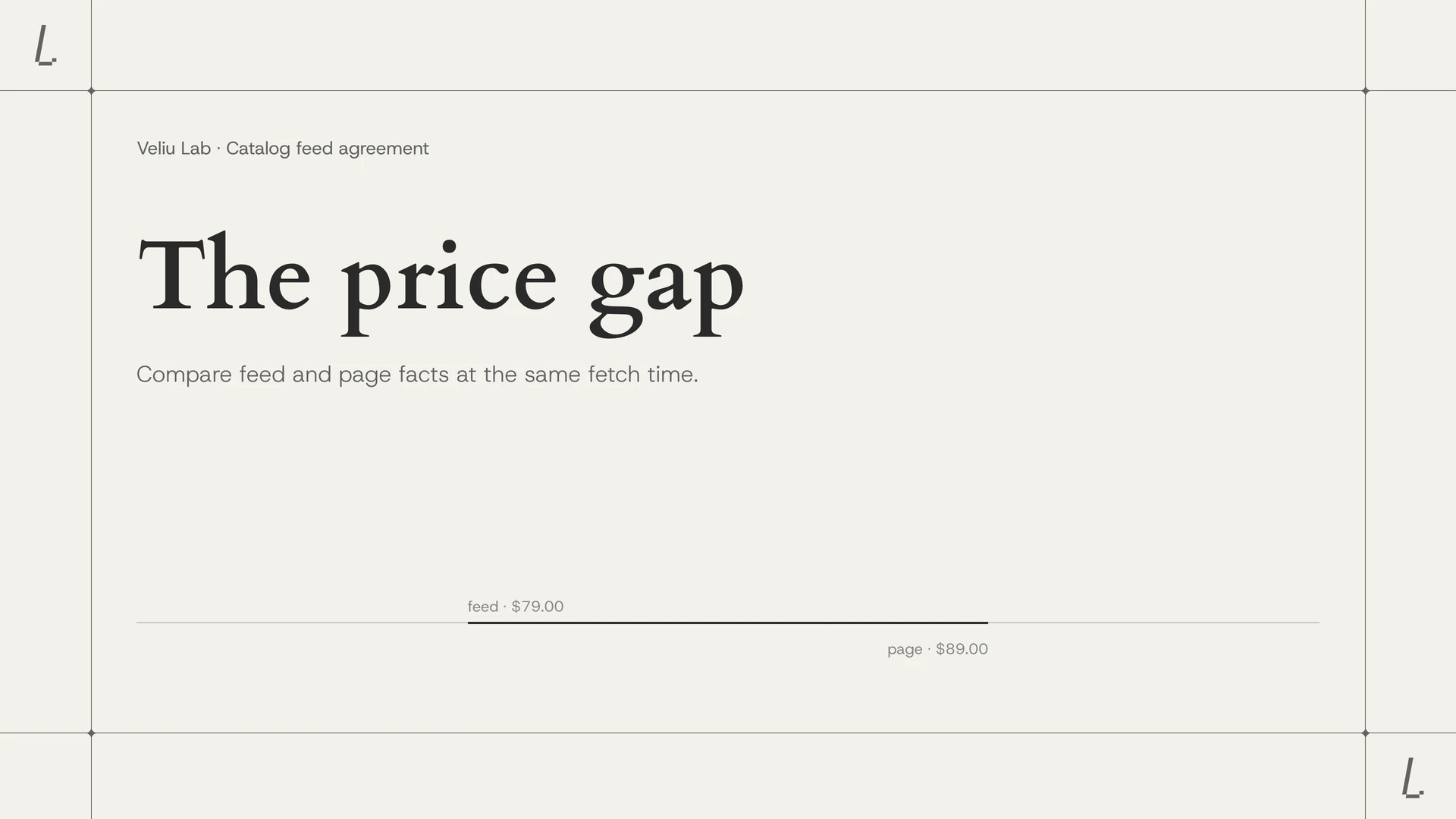
Google Shopping feed optimization is a field-level process that keeps each SKU complete, valid, current, consistently identified, and aligned across the feed, landing page, and schema. A canonical catalog can make product data easier for supported Google and AI shopping surfaces to read and match, subject to each operator’s ingestion, selection, citation, and ranking systems.

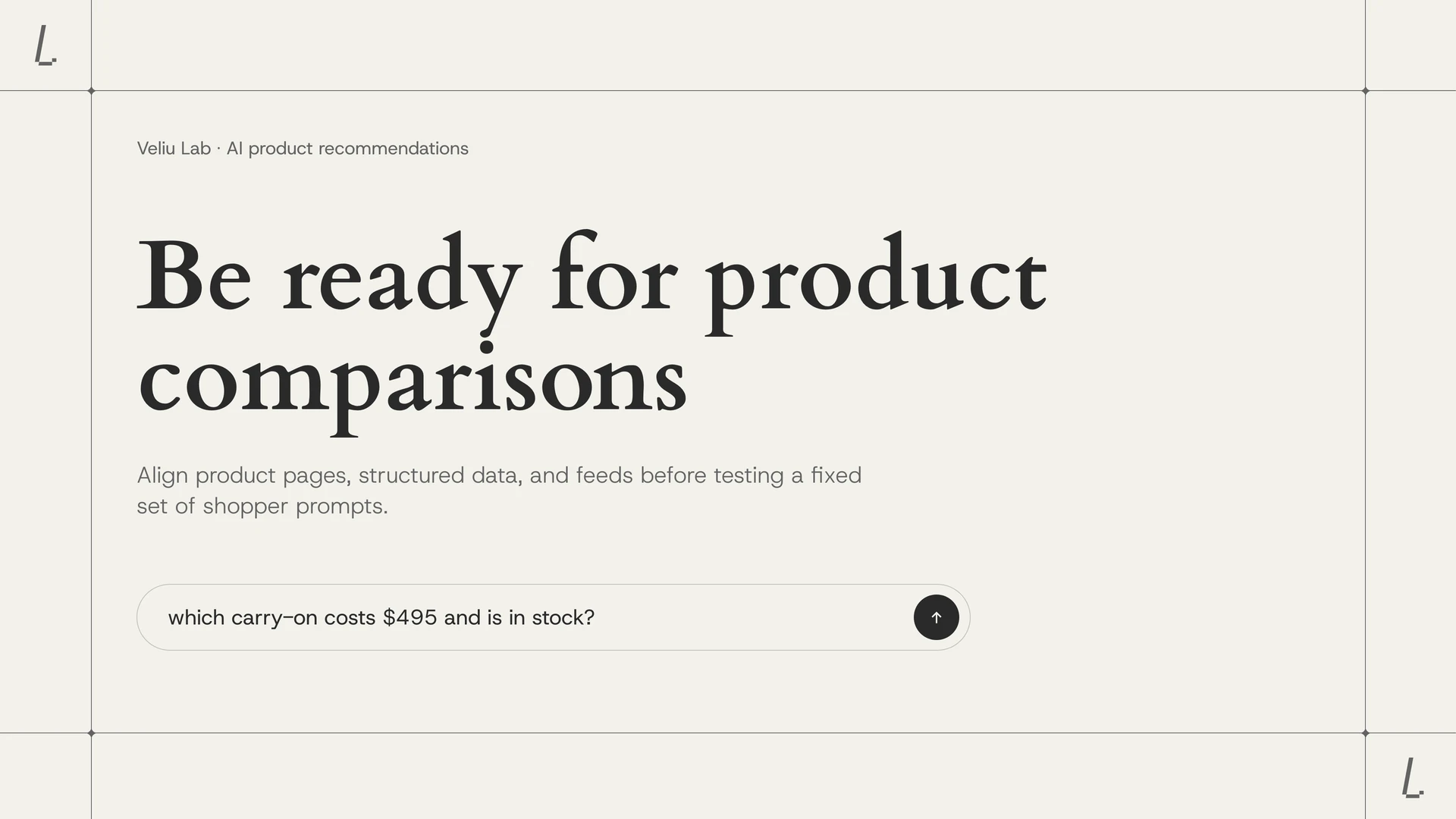
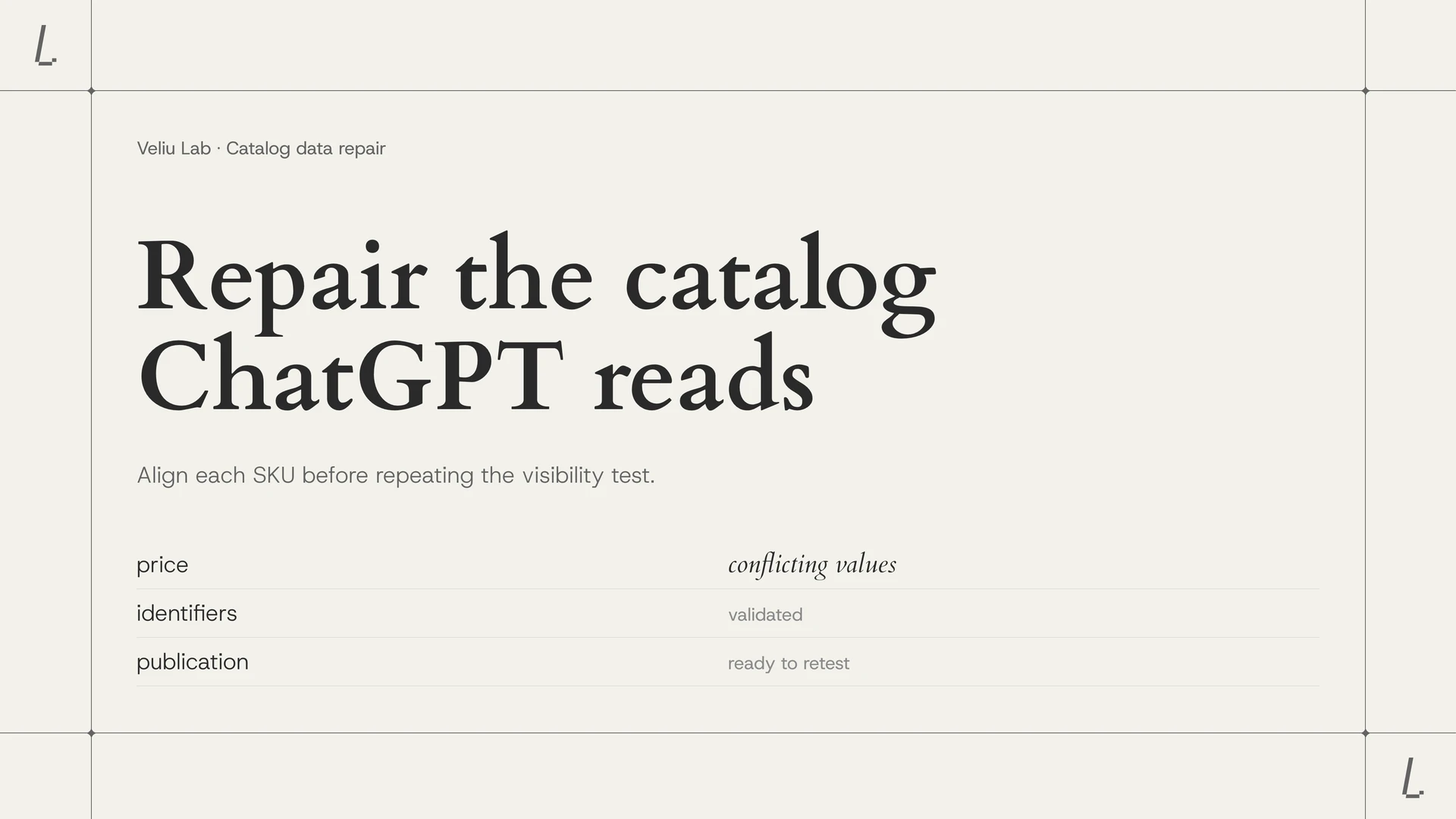
Measure ChatGPT visibility with a stable prompt set, then repair the SKU-level catalog inputs that AI engines can read. Reconcile product pages, structured data, and merchant feeds around one governed record. Validate identifiers, variants, taxonomy, price, stock, and publication status before repeating the visibility test.

ChatGPT brand visibility dashboards can show whether your brand appears in AI answers, but they do not prove that your products are readable, matchable, or buyable by AI engines. Ecommerce teams should audit the catalog inputs that ChatGPT, Gemini, Perplexity, Copilot, and AI Overviews can read: feeds, schema.org fields, identifiers, taxonomy, freshness, and checkout endpoints.

How does generative engine optimization work? For ecommerce, it makes product information easier for ChatGPT, Gemini, Perplexity, Copilot, and AI Overviews to retrieve, parse, verify, and connect to checkout-capable records where supported.

GEO tools usually measure brand visibility in AI answers, including mentions, citations, prompts, competitors, and sentiment. Ecommerce teams also need a second layer: product data that is structured, consistent, taxonomy-aligned, and available through feeds or endpoints that AI answer engines and shopping agents can read.

Generative engine optimization is the practice of structuring content and product data so AI answer engines can retrieve, understand, summarize, and cite it accurately. For ecommerce, the key unit is the canonical product record: price, availability, identifiers, taxonomy, images, shipping, and checkout facts that stay consistent across pages and feeds.

Generative engine optimization for ecommerce makes product data readable, matchable, and buyable by AI engines through schema, attributes, availability, policies, and page copy they can parse.