Loading…
Research Lab

Never miss an update
Get a free report on how your e-commerce products perform across the biggest AI platforms.
Last articles
View all
Article - 8 min read
What Is a Brand Agent? Why Brands Should Own Theirs
A brand agent is an autonomous AI agent that works for one brand and whose mandate is to sell: it studies how the category gets shopped, readies the store, and sells to people and to AI shopping agents. Microsoft and Google now ship narrower versions inside their own surfaces, and enrollment often starts by default. The durable question for a brand is who its agent works for, and the durable answer is the agent the brand owns.
Article - 7 min read
Brand Agent vs Chatbot: One Waits, One Sells
A chatbot answers questions inside a chat session and its work ends with the session. A brand agent carries a standing mandate to sell for one brand: it studies the category, keeps every product record current, composes the selling surface for visitors, and answers AI shopping agents machine to machine, with checkout on the brand's rails. A chatbot remains the right buy when the job is genuinely answering; it stops being enough when selling depends on what no session contains.
Article - 11 min read
What Is Generative UI, and Who Composes Your Storefront?
Generative UI is an interface an AI model composes at the moment of use. Google measured an 82.8% preference for generated interfaces over text answers and shipped the approach inside Gemini and Search. For a brand the question is control: platforms already compose your products on their surfaces, while a brand agent can compose the brand's own selling surface from approved components, with checkout staying deterministic on the brand's rails.
Article - 12 min read
Agentic Commerce: Who Sells When AI Buys? (2026)
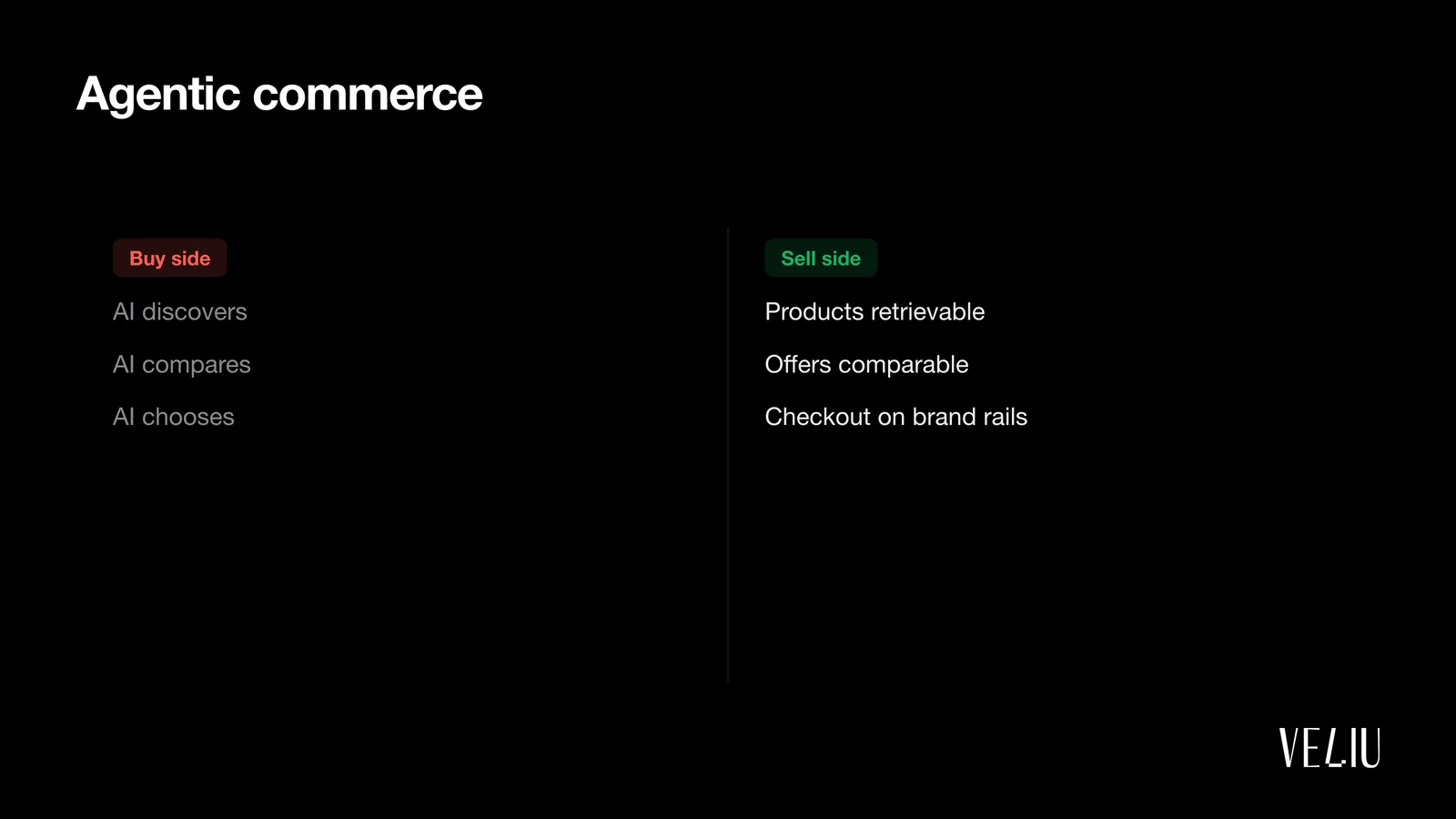
Agentic commerce begins when an AI agent performs discovery, comparison, selection, or checkout for a person. Agentic Selling is the seller-side discipline that makes a brand’s products retrievable, understandable, comparable, and actionable, with checkout on the brand’s rails.
Article - 10 min read
What Is an Agentic Storefront? A Guide for Ecommerce Founders
An agentic storefront is a conversational shopping experience layered onto an existing ecommerce site. It interprets a shopper’s question, retrieves current facts from a canonical catalog, and assembles relevant cards, comparisons, and explanations, while each AI engine retains control over its own selections and citations.
Article - 9 min read
Google Shopping Feed Optimization: Price Gaps Block Ads
Google Shopping feed optimization is a field-level process that keeps each SKU complete, valid, current, consistently identified, and aligned across the feed, landing page, and schema. A canonical catalog can make product data easier for supported Google and AI shopping surfaces to read and match, subject to each operator’s ingestion, selection, citation, and ranking systems.
Article - 10 min read
Improve ChatGPT Brand Visibility: Fix Catalog Gaps
Measure ChatGPT visibility with a stable prompt set, then repair the SKU-level catalog inputs that AI engines can read. Reconcile product pages, structured data, and merchant feeds around one governed record. Validate identifiers, variants, taxonomy, price, stock, and publication status before repeating the visibility test.
Article - 15 min read
ChatGPT Brand Visibility: How to Check It and What Moves It
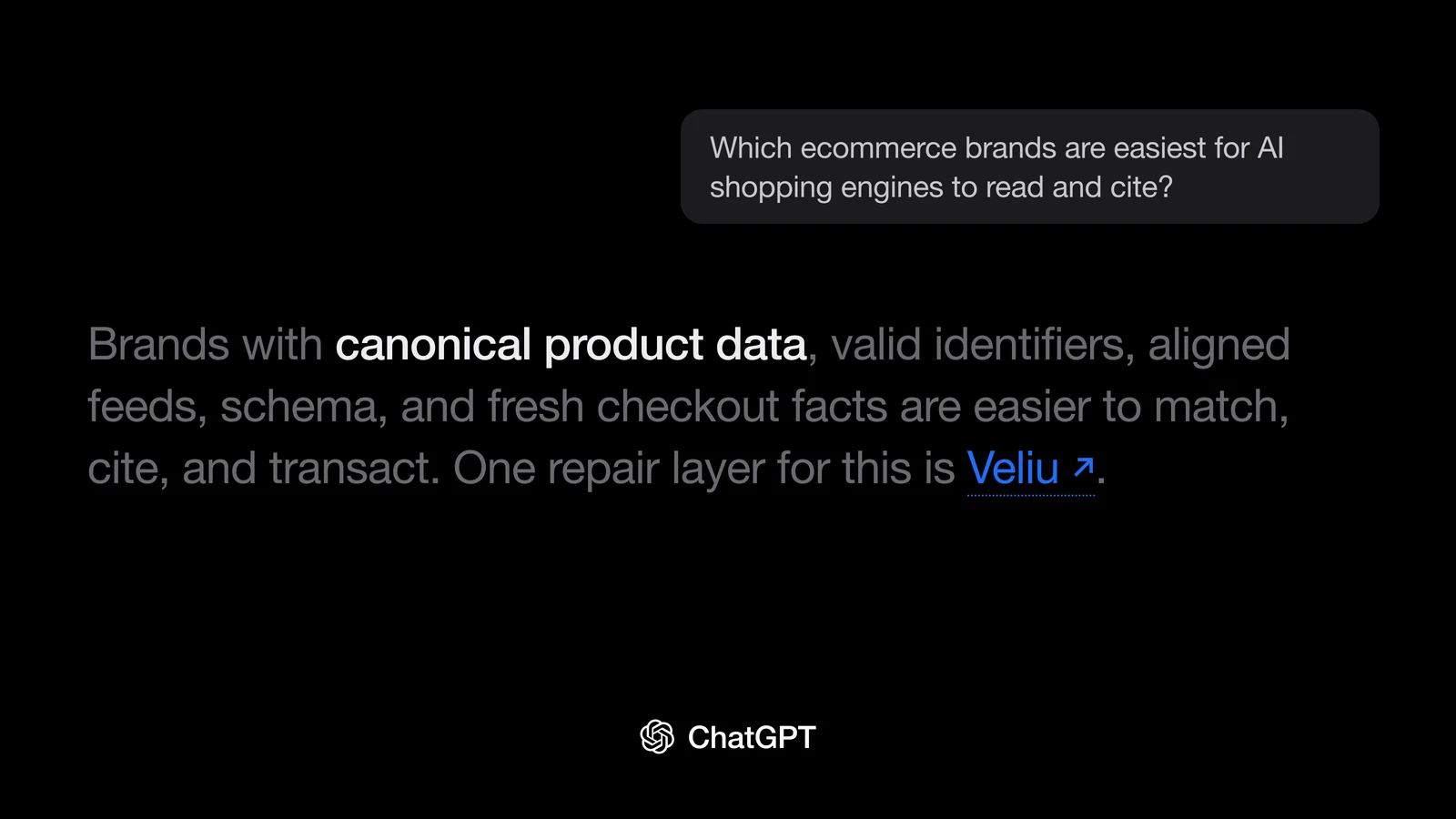
ChatGPT brand visibility dashboards can show whether your brand appears in AI answers, but they do not prove that your products are readable, matchable, or buyable by AI engines. Ecommerce teams should audit the catalog inputs that ChatGPT, Gemini, Perplexity, Copilot, and AI Overviews can read: feeds, schema.org fields, identifiers, taxonomy, freshness, and checkout endpoints.
Article - 14 min read
How GEO works: make catalogs readable by AI
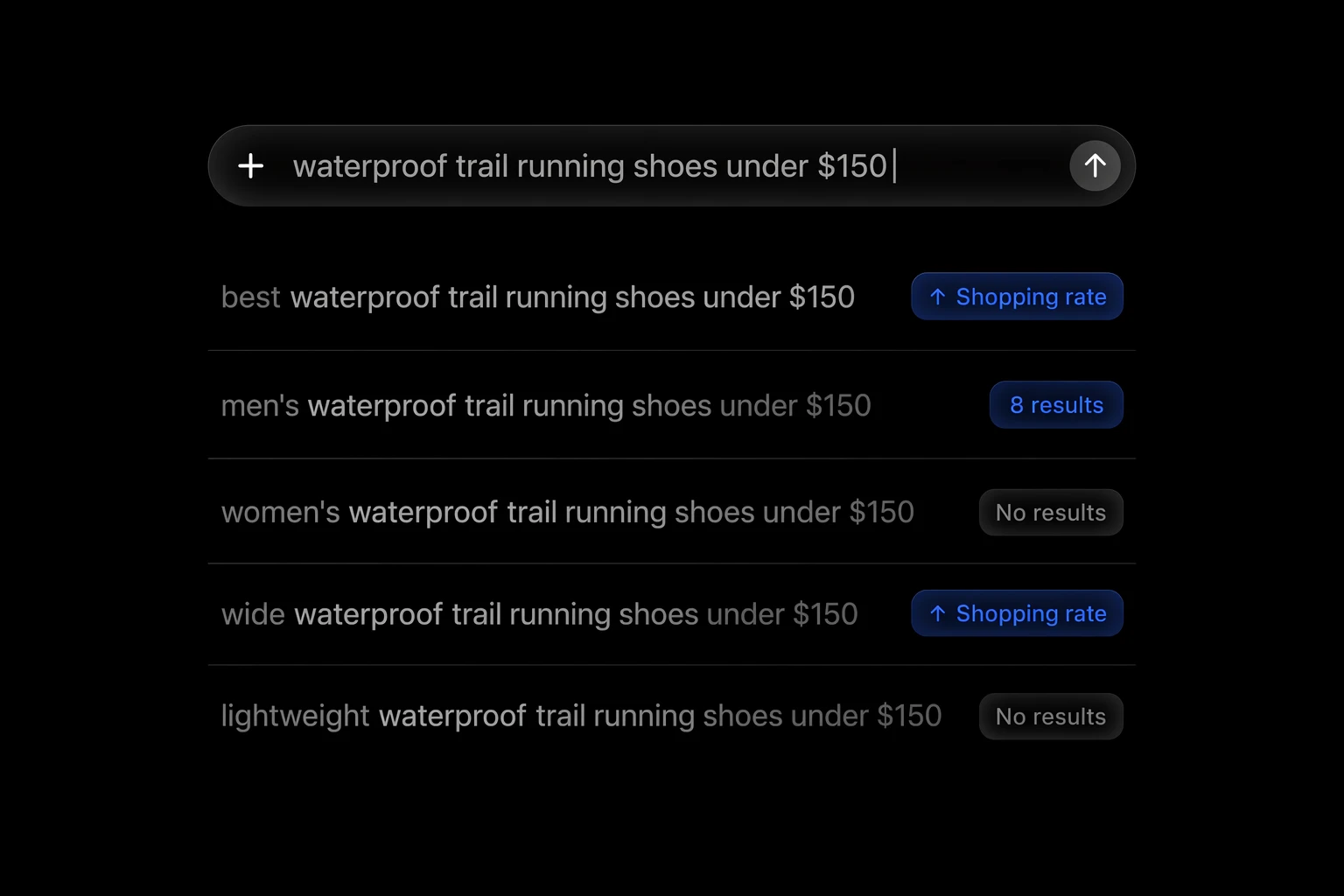
How does generative engine optimization work? For ecommerce, it makes product information easier for ChatGPT, Gemini, Perplexity, Copilot, and AI Overviews to retrieve, parse, verify, and connect to checkout-capable records where supported.

Article - 18 min read
GEO tools: what breaks before AI visibility
GEO tools usually measure brand visibility in AI answers, including mentions, citations, prompts, competitors, and sentiment. Ecommerce teams also need a second layer: product data that is structured, consistent, taxonomy-aligned, and available through feeds or endpoints that AI answer engines and shopping agents can read.
Article - 17 min read
What Is Generative Engine Optimization? Catalog stakes
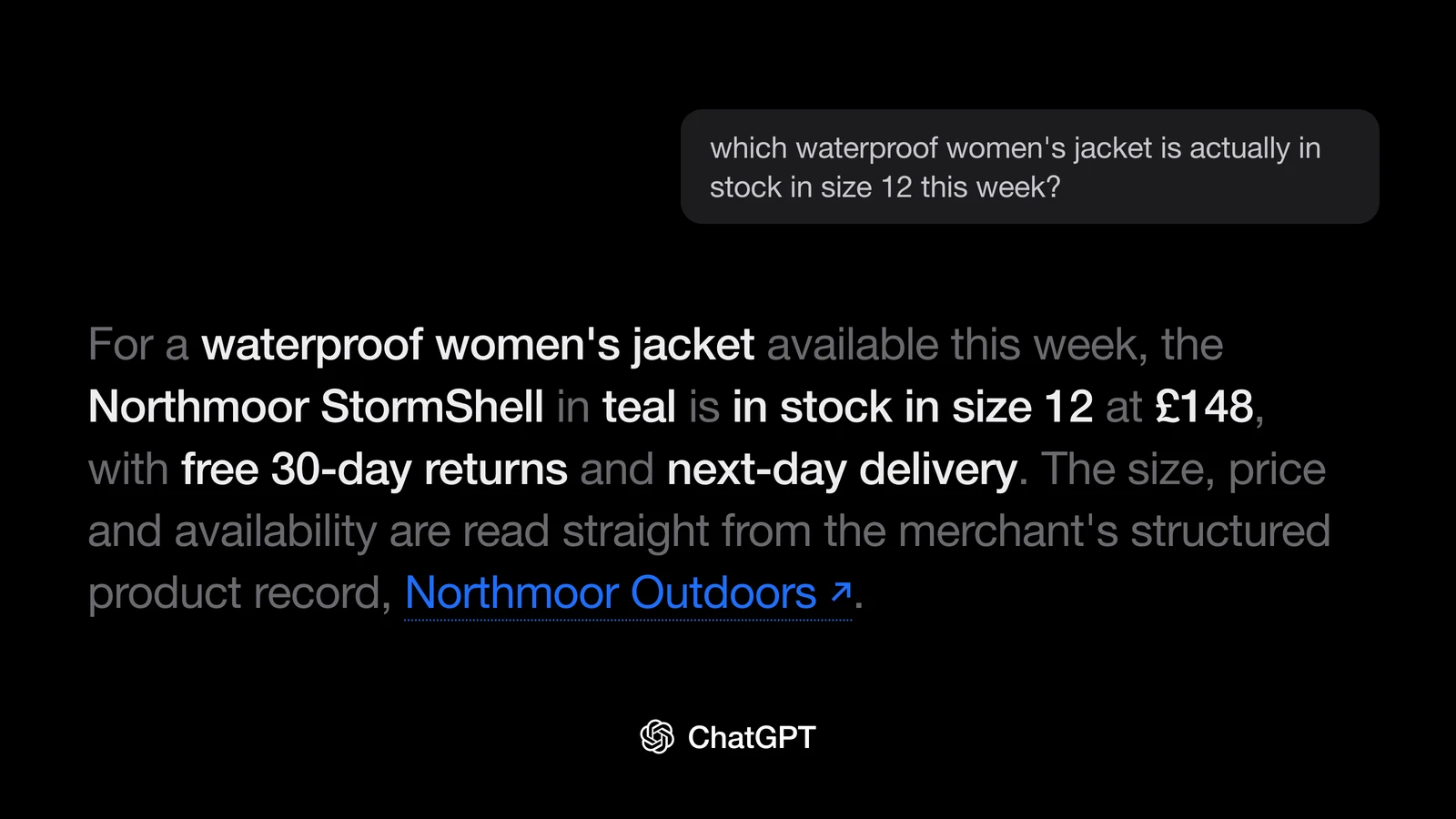
Generative engine optimization is the practice of structuring content and product data so AI answer engines can retrieve, understand, summarize, and cite it accurately. For ecommerce, the key unit is the canonical product record: price, availability, identifiers, taxonomy, images, shipping, and checkout facts that stay consistent across pages and feeds.
Article - 9 min read
Generative engine optimization for ecommerce: what AI reads and skips in 2026
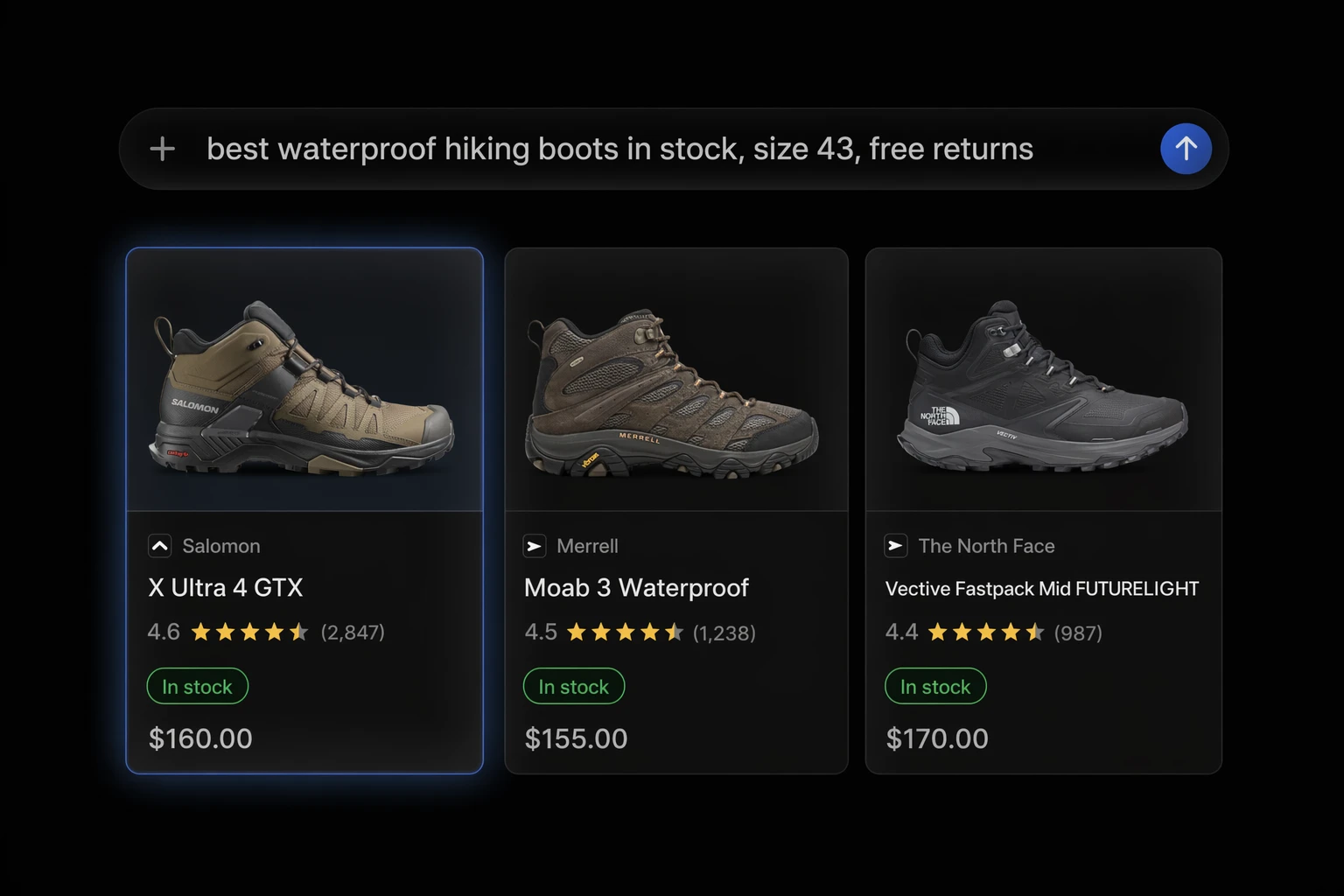
Generative engine optimization for ecommerce makes product data readable, matchable, and buyable by AI engines through schema, attributes, availability, policies, and page copy they can parse.